The Long and Short of it
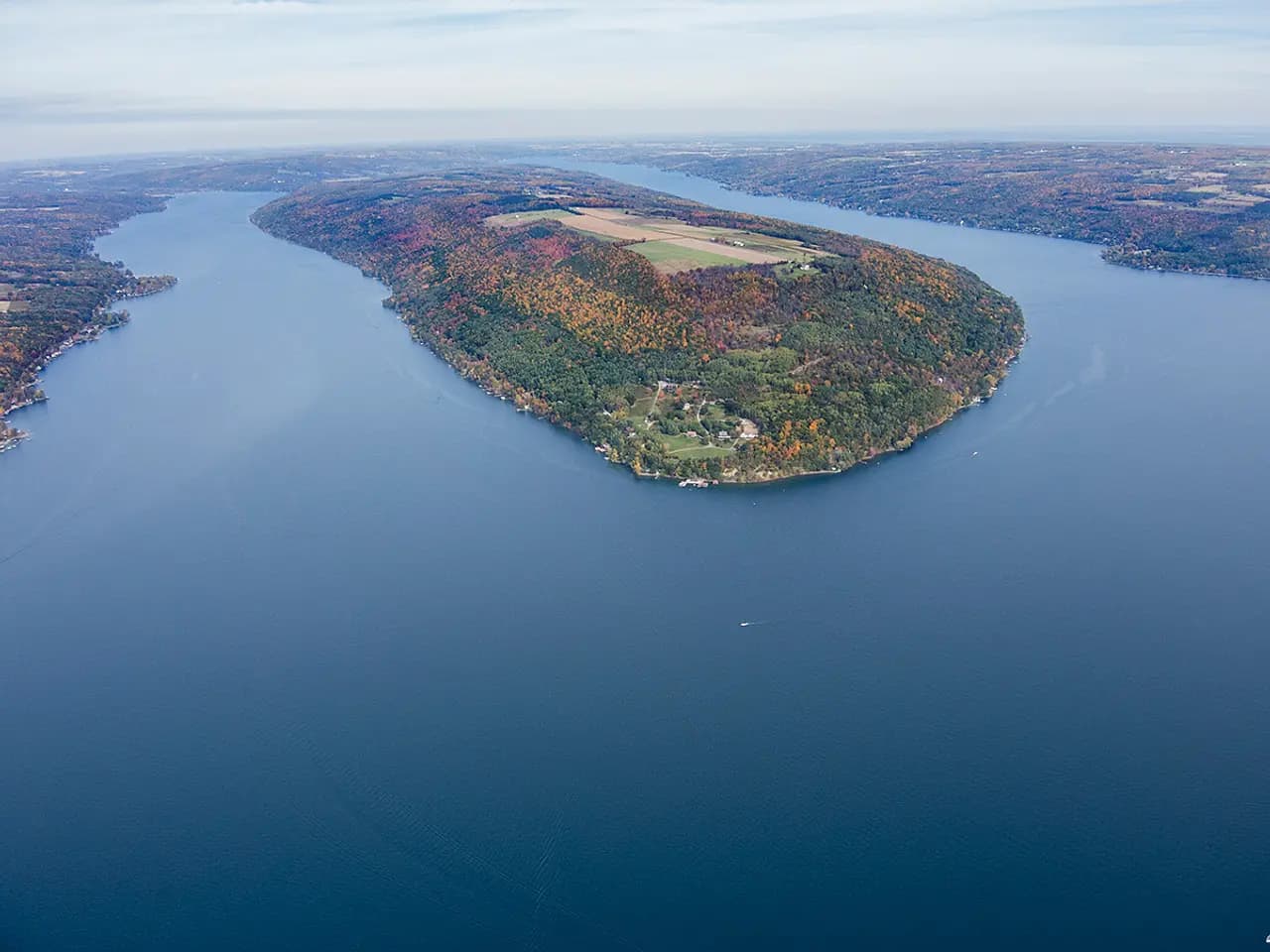
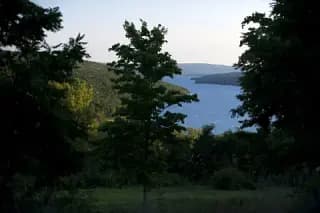
Keuka Lake is the only naturally Y-shaped lake in the United States, and because of how the glaciers carved its two branches, it is also the only lake in the country whose water flows both north and south simultaneously. No other lake in America does this. That dual flow powered 40+ mills, launched a canal system, and eventually gave seaplanes a runway.
Outdoors
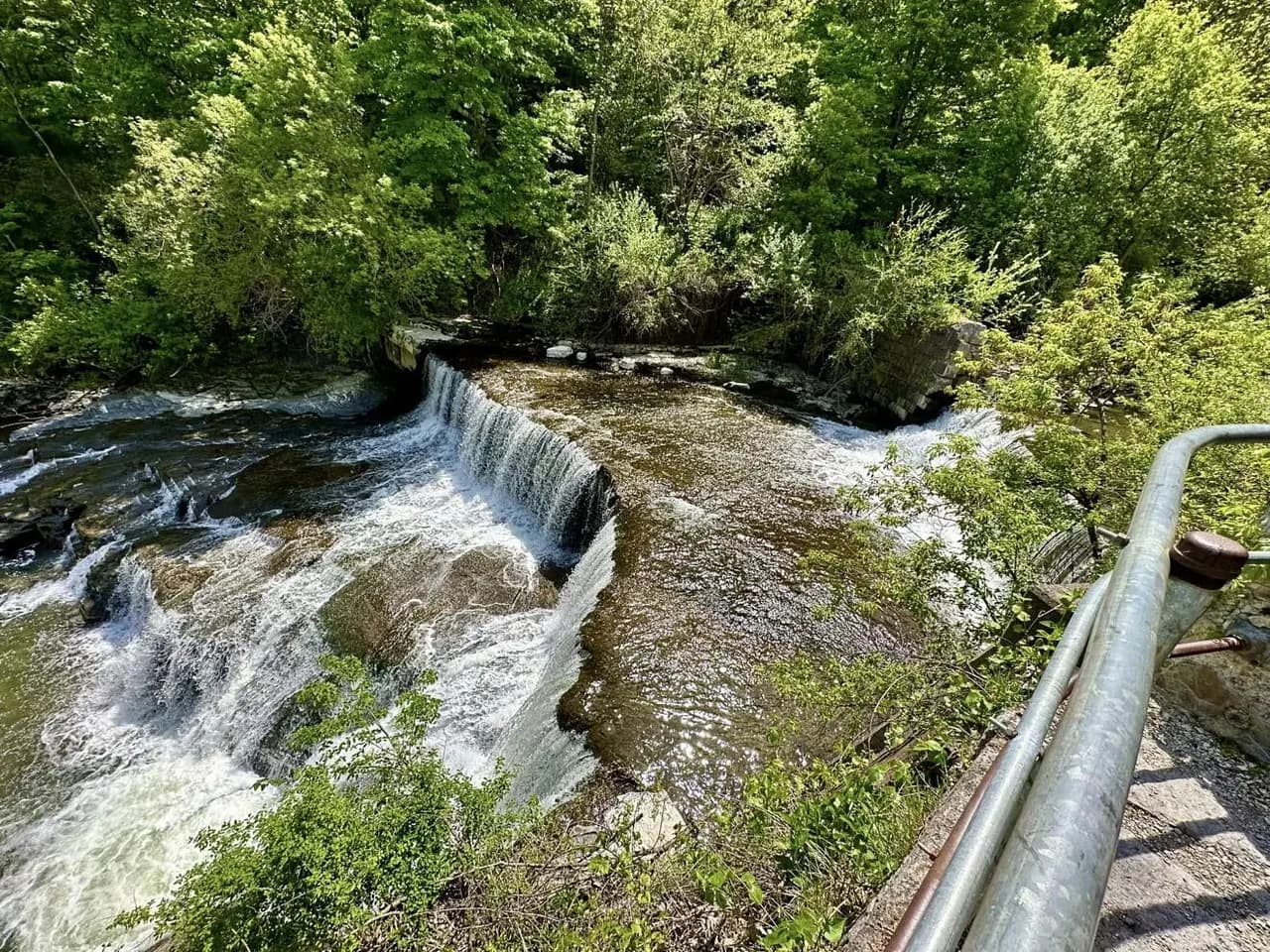
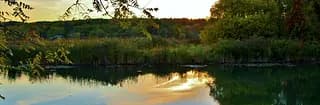
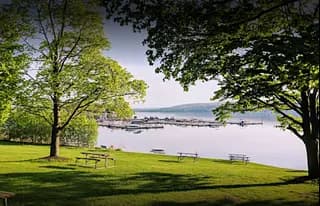
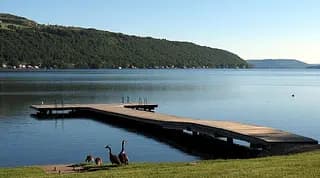
The primary draw is the lake itself: water access concentrated at Hammondsport, Champlain Beach, and Keuka Lake State Park. The Keuka Outlet Trail is the most significant trail infrastructure on any Keuka shore.
Heritage Sites
The Glenn H. Curtiss Museum, Pleasant Valley Wine Company, and the trailhead for the Keuka Outlet are all within fifteen miles of each other, accessible in a single day without backtracking. Experience the Public Universal Friend's Jerusalem community, the canal that connected the lake to the wider world, the first American wine to win in Europe, and the man who received the first pilot's license in the United States.
Keuka Wine
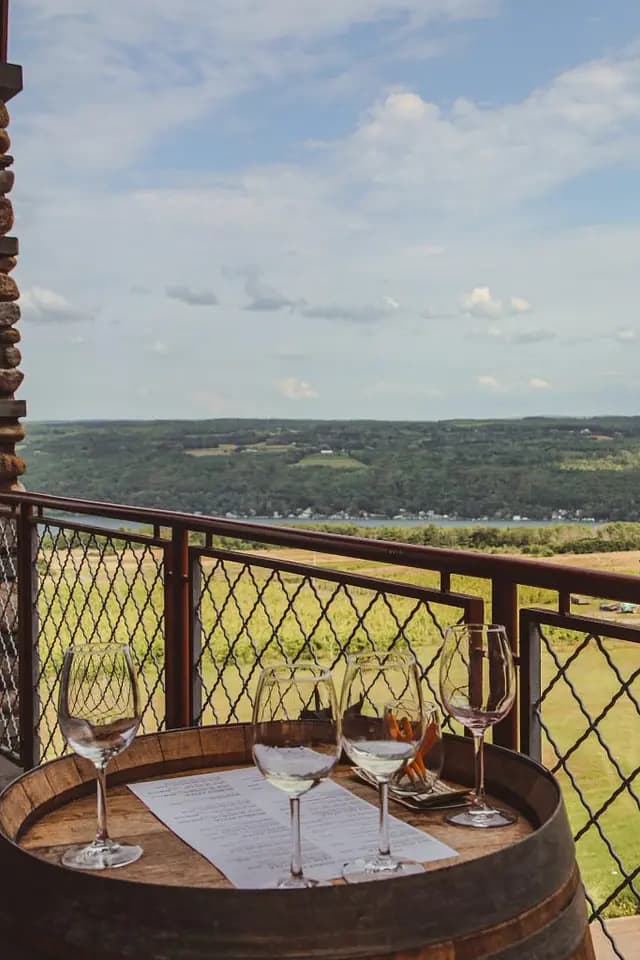
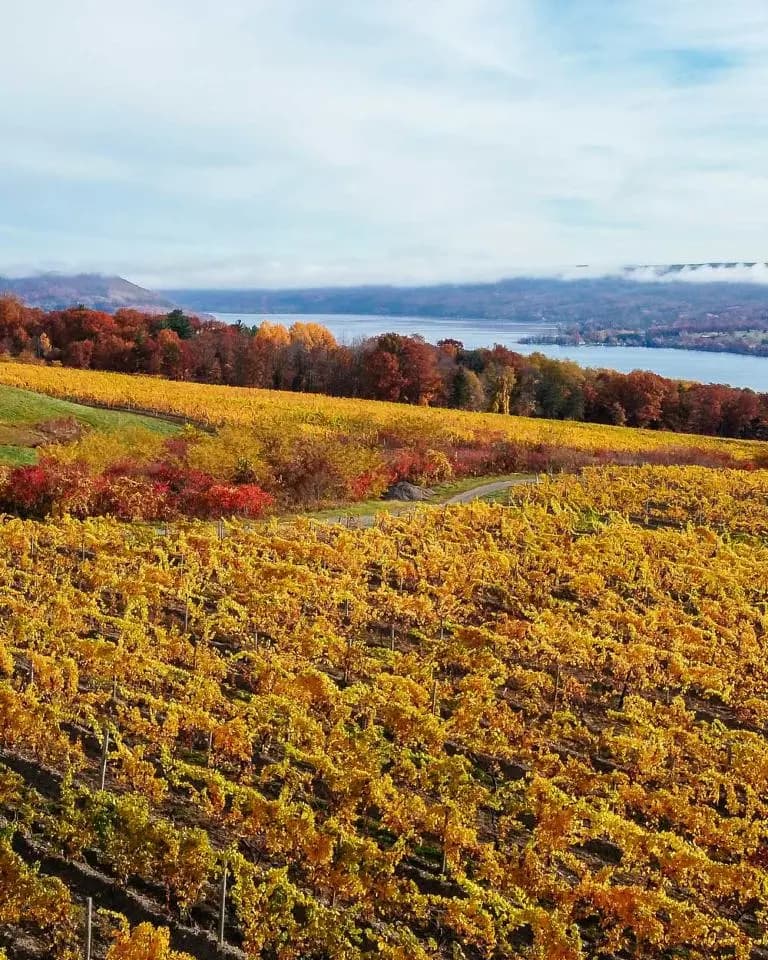
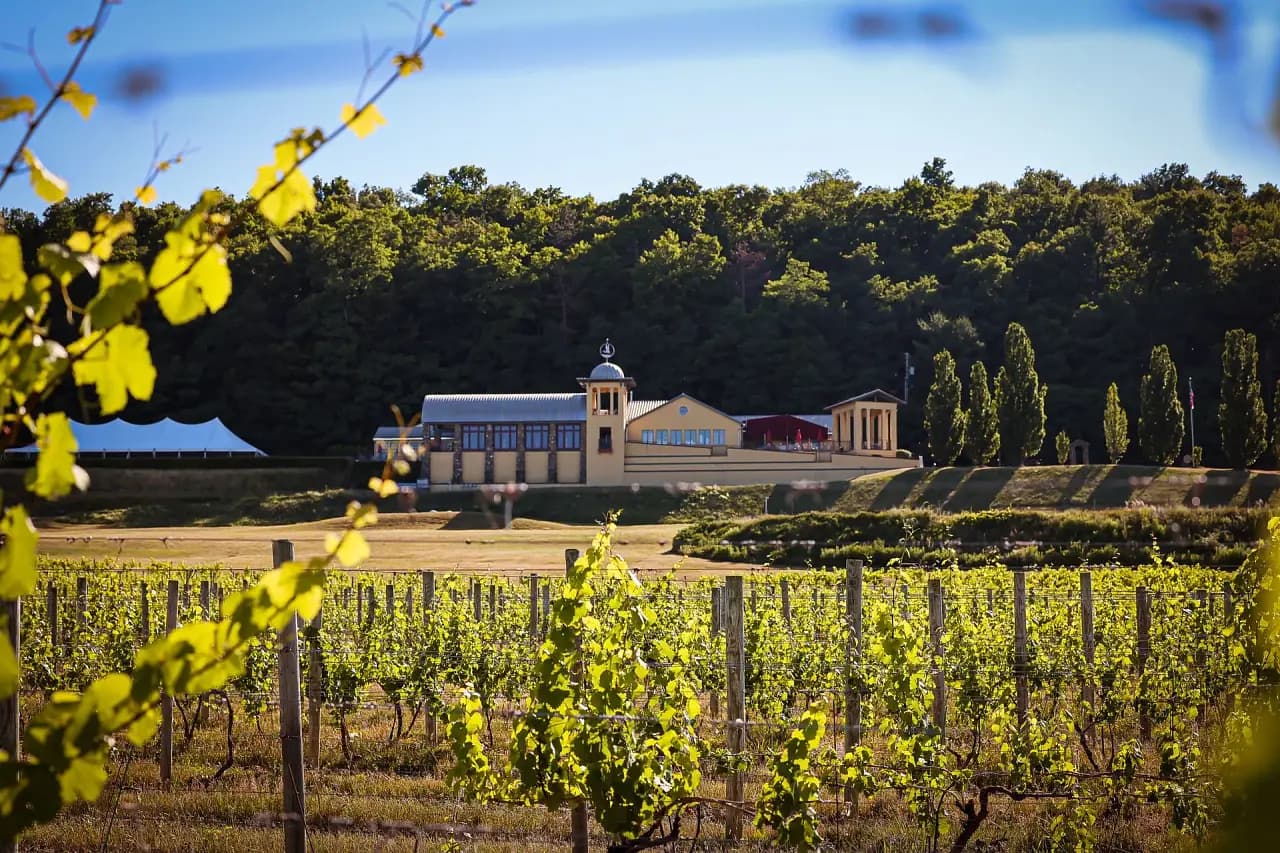
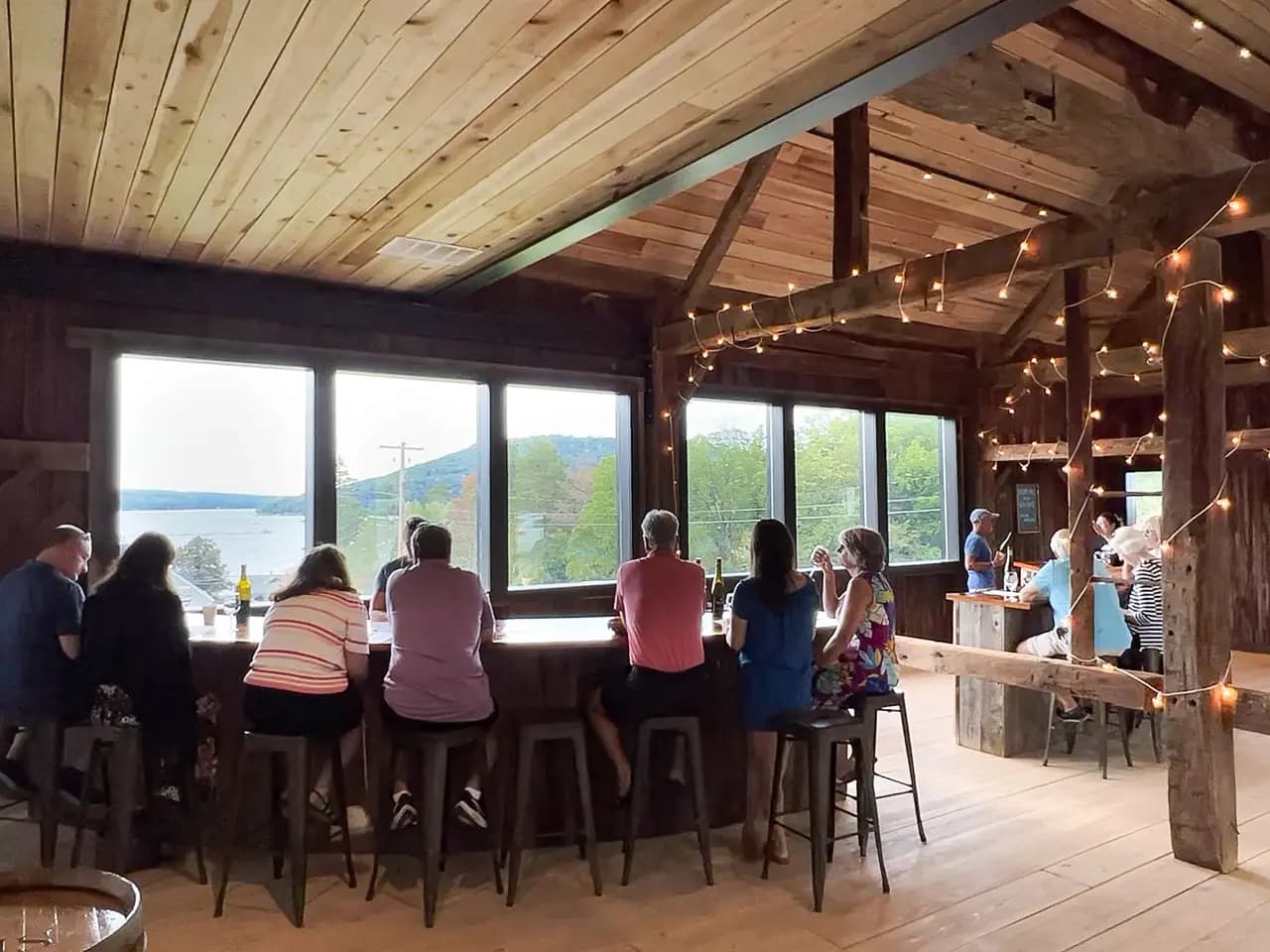
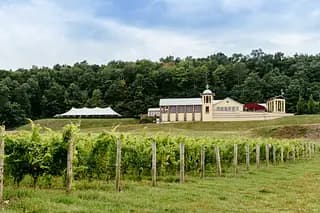
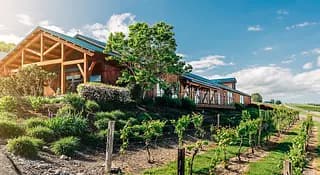
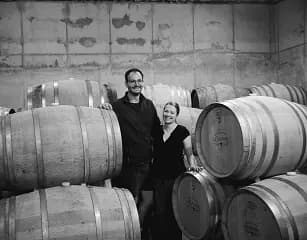
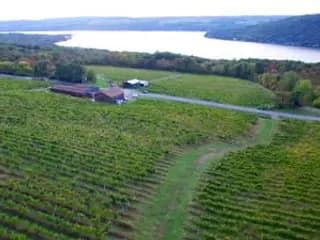
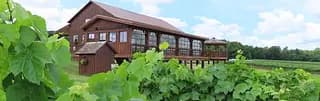
The Keuka Lake Wine Trail is the most intimate circuit in the Finger Lakes: six producers, a full loop in just over an hour without stops, and terrain that keeps vineyards on three sides for most of the drive. The stops reward unhurried time.
The wine runs lean and mineral relative to Seneca: higher natural acidity, a more restrained profile, and a growing season that makes Keuka the center of sparkling production in the region. The same conditions that produced Pleasant Valley's 1867 Paris honorable mention are still legible in what Dr. Frank's Chateau sparkling program makes today. Beyond the six official Keuka Lake Wine Trail members, Dr. Konstantin Frank Winery, Pleasant Valley Wine Company, and McGregor Vineyard are Keuka-area producers that belong on any serious itinerary of the lake.
Approach
The east and west arms do not overlap. A practical approach takes them separately: one arm per day, beginning or ending at Hammondsport where the two sides converge. A single full day covers the complete circuit with meaningful time at each producer. The loop north through Branchport and back down the east arm runs just over 40 miles. Tasting rooms open fully May through November; hours tighten in shoulder season, and calling ahead in April or December is worth the minute.
Farms
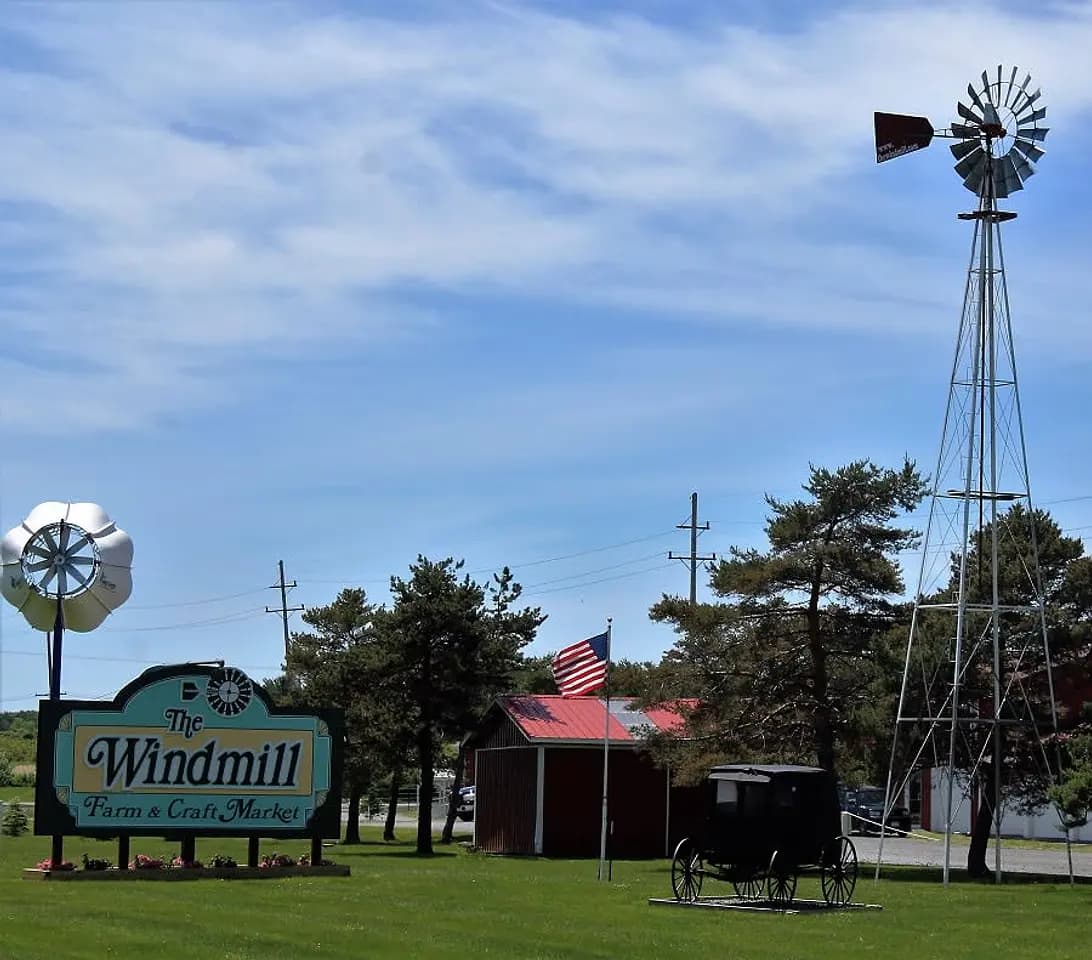
Keuka sits at the intersection of two distinct agricultural cultures: the Amish and Old Order Mennonite farming communities north of Penn Yan, and the conventional fruit and grape agriculture that has supplied the wine industry since the 1860s.
Towns
Keuka's three settlements occupy the three tips of the Y. Hammondsport sits at the south end of the east arm, where the lake narrows above Depot Park. Penn Yan anchors the northeast arm as the county seat of Yates County. Branchport holds the northwest arm's tip, the quietest of the three, backed by the lake's main public park.
Keuka Lake Deep Dive
The shape of Keuka Lake gives it away before anything else does. The other ten Finger Lakes run in long, straight glacial corridors, but Keuka divides into two arms that reconverge at a promontory called Bluff Point before the water exits north through the Keuka Outlet into Seneca Lake, seven miles east. The Y-shape also means the lake flows in two directions simultaneously: water from each arm converges at Bluff Point and exits north through the Outlet. Keuka is the only major lake in the United States where this occurs. That geometry gives the wine trail a quality no map quite captures: from the right elevation on either arm, the vineyard surrounds the visitor on three sides at once.
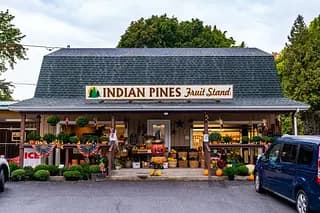
The Seneca Nation called this convergence point "o-go-ya-ga" — the promontory — and their villages occupied the shoreline at Branchport, at the Indian Pines site in what is now Penn Yan, and on Bluff Point itself, where pre-Seneca stone ruins documented in the 1870s had stood long enough that even the Seneca could not account for them. The Sullivan-Clinton Campaign of 1779 burned through this territory as it did Cayuga land to the east, clearing the way for settlers who arrived almost immediately after.
Jump In
Keuka is the only Finger Lake with a branching form. The others are linear because their basins were carved by glaciers grinding straight down river valleys. Keuka's Y formed because a harder sandstone ridge at Bluff Point resisted erosion while the surrounding Devonian shale was scraped away. Ancient rivers flowed around it on both sides, creating two separate arms. When the glaciers retreated (~12,000–14,000 years ago), both valleys filled with water, and the Bluff became a peninsula rather than a mountain.
Before the Ice Age, the western and southern branches of Keuka were a single, north-to-south flowing river. When glaciers gouged the eastern tributary deep enough, the drainage direction reversed in that arm, it now flows south-to-north. The western branch still flows north-to-south. Where they meet, both eventually drain east to Seneca Lake through the Keuka Lake Outlet at Penn Yan. This is what makes it the only lake in the country that flows both north and south simultaneously.
During the melt period (~15,000 years ago), water levels rose high enough that the Bluff was temporarily an island for approximately 300 years.
The bedrock is Devonian-era limestone, sandstone, and shale; the same geology that creates the distinctive terroir for Keuka's wine grapes. The watershed covers 110,000 acres.
The first permanent white settlement in western New York was not built by farmers or trappers, but by followers of one of the most radical religious figures in American history. Jemima Wilkinson, born in Cumberland, Rhode Island in 1752, raised Quaker, fell gravely ill in 1776 (likely typhus) and, upon recovery, declared that Jemima had died and that their body was now inhabited by a genderless spirit called the "Publick Universal Friend." The Friend refused gendered pronouns for the rest of their life.
The Society of Universal Friends formed as the Friend preached throughout New England and Philadelphia, attracting hundreds. By the late 1780s, advance parties of the society traveled west to scout land near the lakes. The first group landed at what is now Friends Landing, near the foot of the Keuka Lake Outlet in 1788. The Friend joined them in April 1790.
By 1790, the settlement near Penn Yan had grown to nearly 300 members, the largest settlement of any kind this far west in New York State, larger than both Geneva and Canandaigua at the time. The Friend was the first American-born woman to found a religious movement.
Internal property disputes and disagreements fractured the society; some stayed near the outlet, others moved with the Friend to Jerusalem, New York (a township still bearing that name today). The Friend lived there until death on July 1, 1819, at approximately 66 years old.
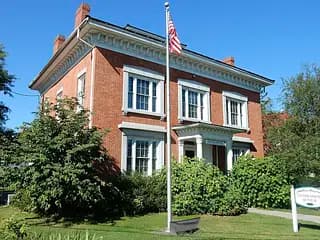
What to see today: The Friend's home on Friend Hill Road in Jerusalem is on the National Register of Historic Places. The Yates County History Center / Oliver House Museum in Penn Yan holds the Friend's portrait, Bible, sidesaddle, broad-brimmed hat, carriage, and death book. The site of Seneca Mills, one of the first mills the society erected on the Keuka Outlet, still exists along the Outlet Trail.
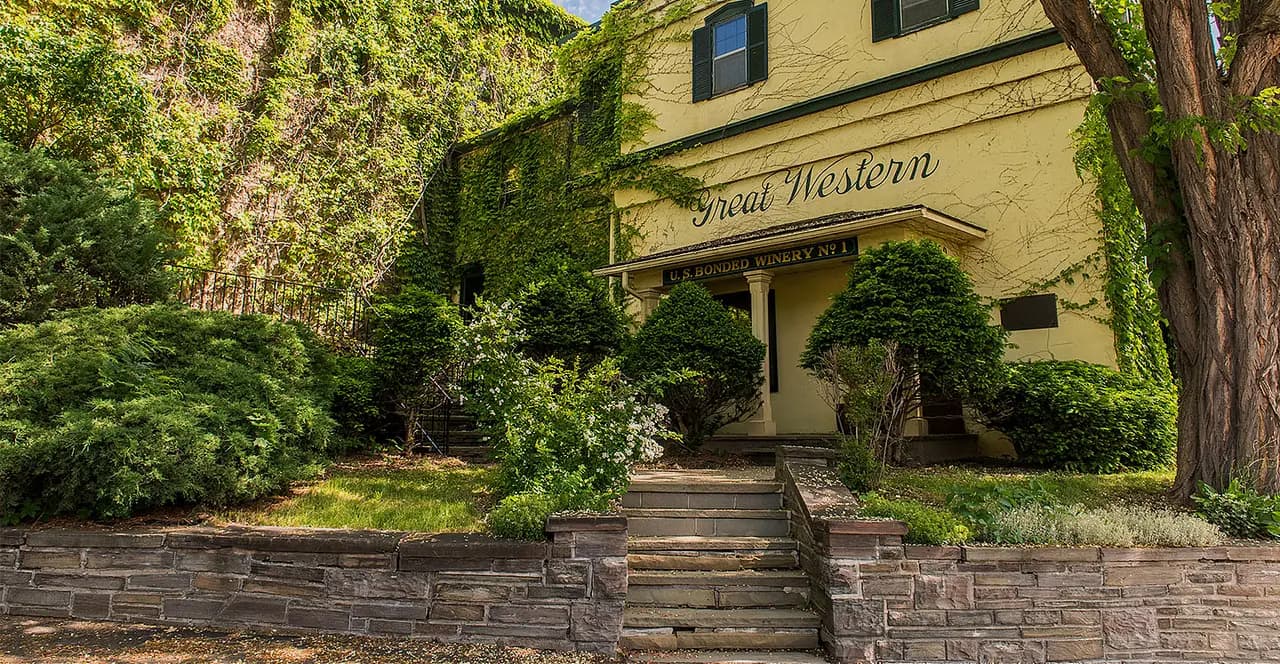
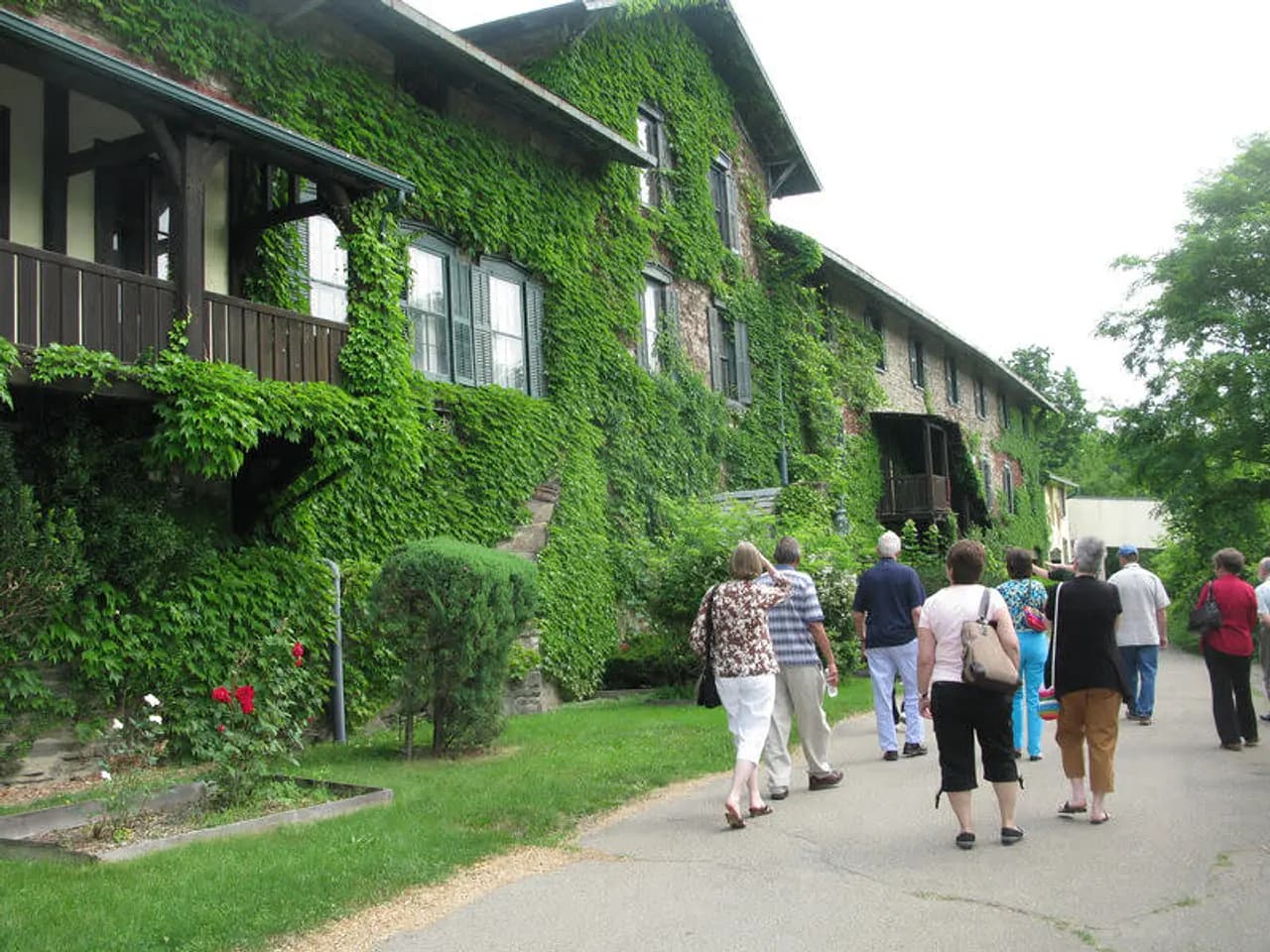
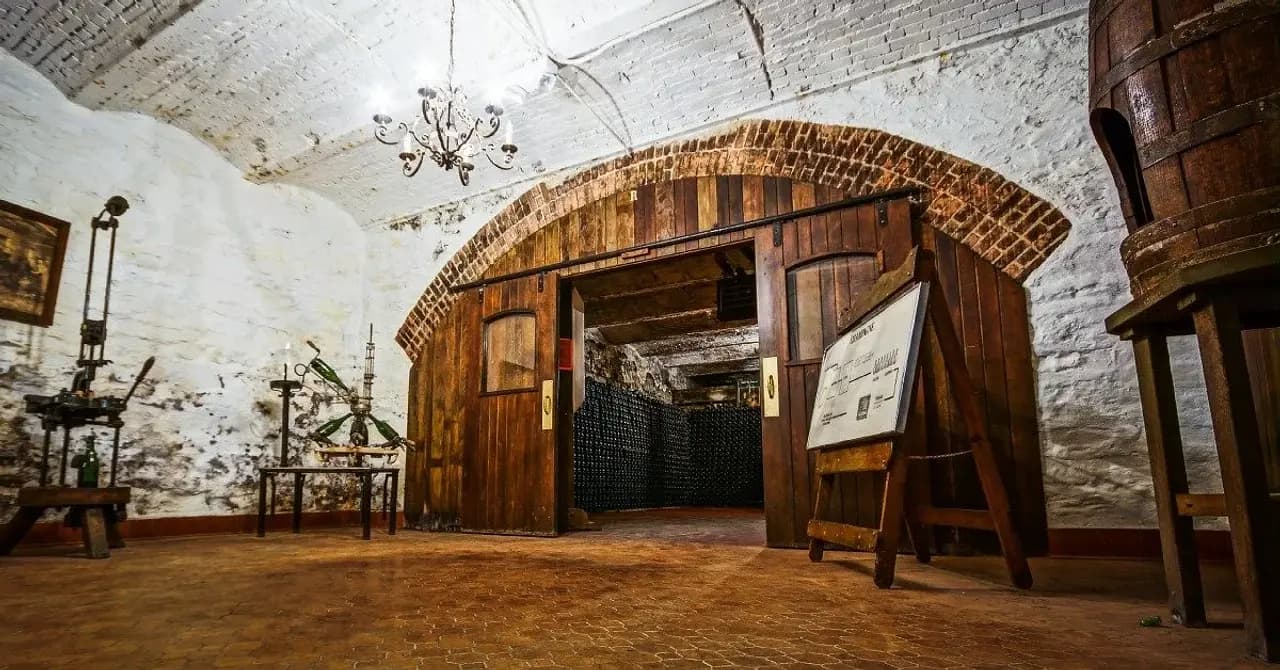
March 15, 1860: Charles Davenport Champlin and 12 Hammondsport businessmen consolidated holdings under "Articles of Association for the Manufacture of Native Wine" with $10,000 capital. The winery was built into a hillside just south of the village, with stone structures and cellars carved deep into the slope. The two founding winemakers were Jules and Joseph Masson, noted French-born craftsmen.
Pleasant Valley became US Bonded Winery No. 1, first to be taxed, first to be officially bonded. Eight original stone buildings remain on the National Register of Historic Places.
In 1865, sparkling wine production began. In March 1871, founder Champlin sent a case to Boston wine connoisseur Marshall P. Wilder, who served it at a Parker House dinner and declared it "the Great Champagne of the Western World." The wine was renamed Great Western.
Because the soil and climate conditions so closely mirrored the Champagne district of France, Pleasant Valley was called the "Rheims of America." The US Postal Service opened a branch at the winery in 1870 with the postmark "Rheims, N.Y." used until 1945.
Great Western became the first American sparkling wine to win a major European competition (Vienna 1873; Paris 1889; Brussels 1897; Paris 1900; Brussels 1910). By the 1870s–80s, their shipping records listed the most fashionable restaurants in the country as clients.
Pleasant Valley survived Prohibition (1919–1933) by selling sacramental and medicinal wine. It went through multiple corporate owners (Taylor Wine, Coca-Cola, Seagram) before returning to local family control. It remains the largest producer of bottle-fermented champagne in the eastern United States and the only New York winery to win the Governor's Cup for "Best Wine in New York" two consecutive years.
Under law, Pleasant Valley is one of fewer than 10 wineries in the country permitted to label their sparkling wine "champagne."
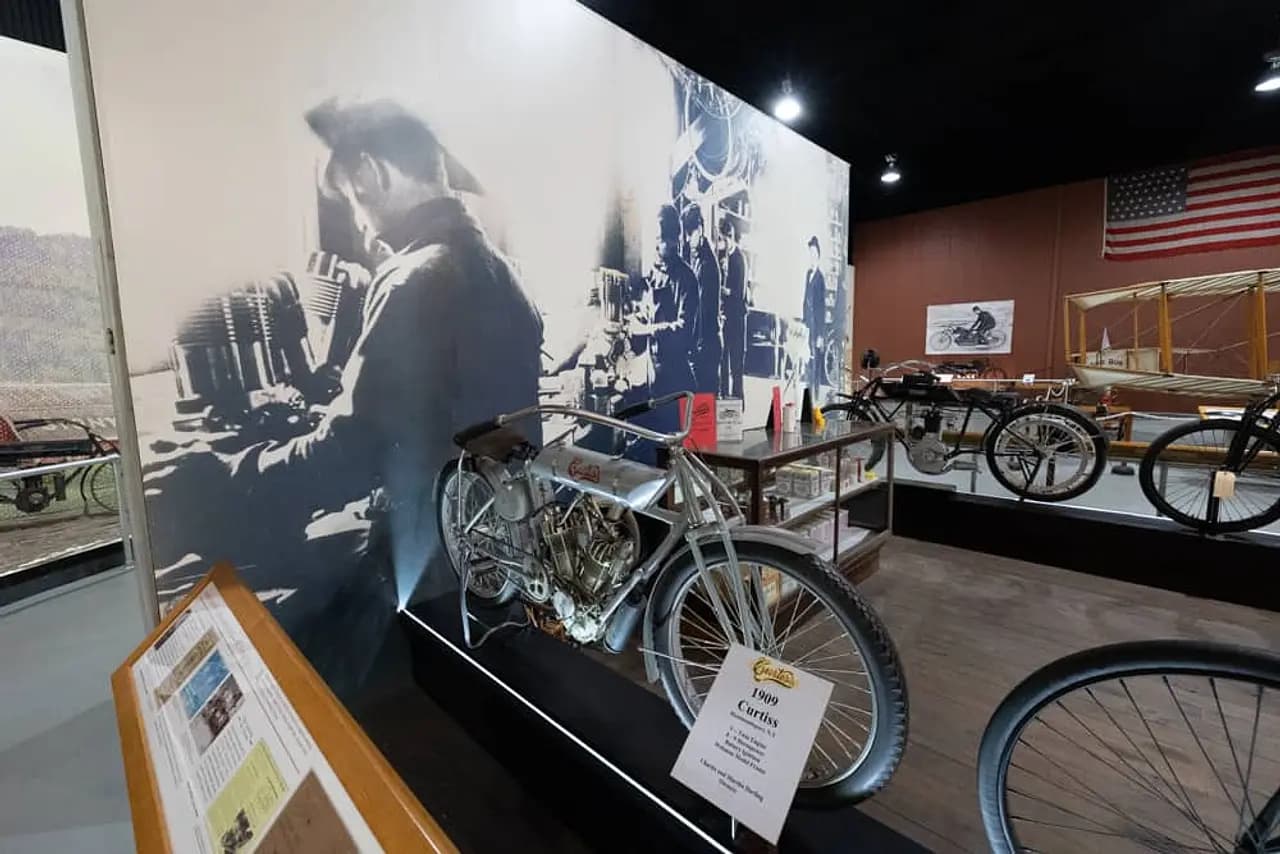
Glenn Curtiss was born in Hammondsport on May 21, 1878, with an eighth-grade education. He started building and racing bicycles, moved to motorcycles, and by 1907 was known as the "Fastest Man on Earth" after driving a V8 motorcycle at 136.4 mph, a world speed record that stood for four years.
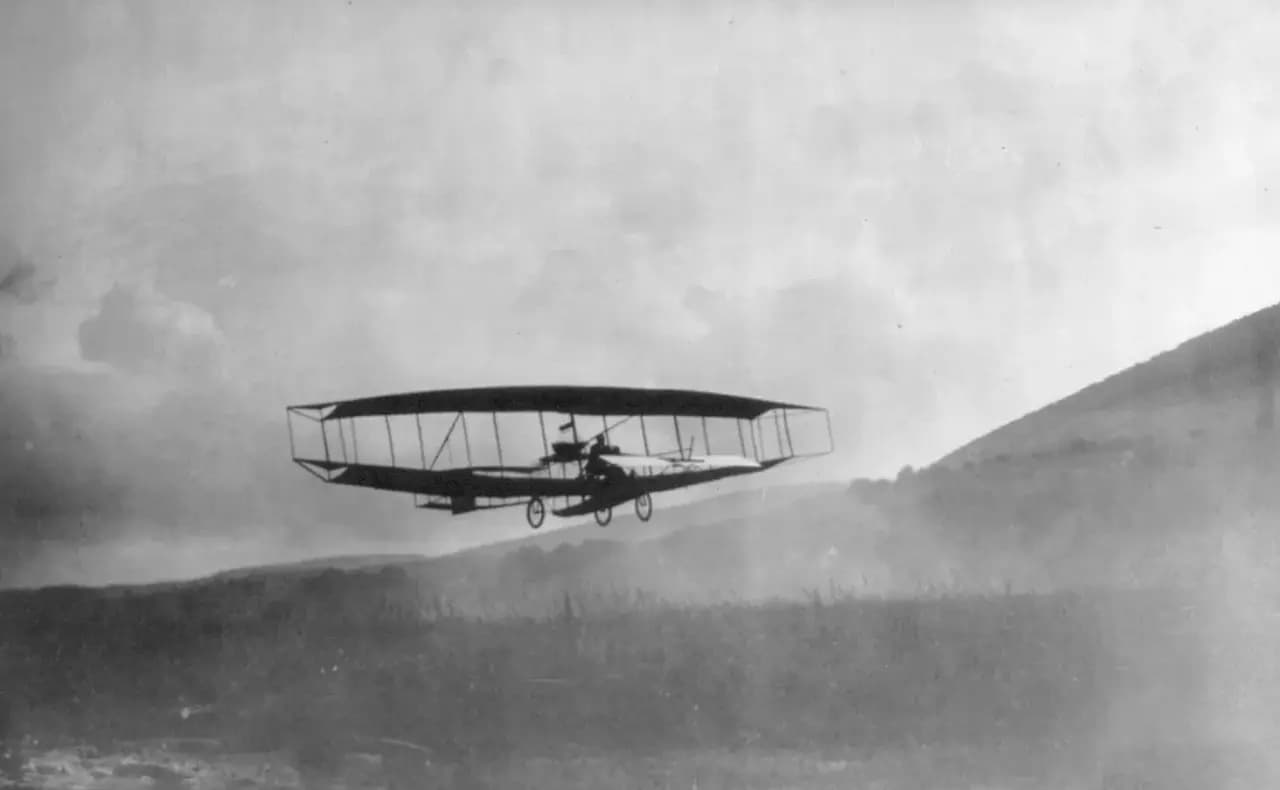
He joined Alexander Graham Bell's Aerial Experiment Association in 1907. On July 4, 1908, at Hammondsport, Curtiss flew the June Bug 5,080 feet, the first pre-announced public flight of a heavier-than-air flying machine in America, and won the Scientific American Trophy and its $2,500 prize.
In 1911, the Aero Club of America issued pilot licenses in alphabetical order. Orville Wright received #5. Wilbur Wright received #5. Glenn Curtiss received US Pilot's License #1.
On January 26, 1911, flying over Keuka Lake, Curtiss made the first seaplane flight in the United States, taking off from and landing on water. He then sold the US Navy their first aircraft in July 1911 (the A-1 Triad / Model E, the first amphibious aircraft, equipped with retractable wheels). He trained the Navy's first pilots. For this, he is known as the Father of Naval Aviation.
His most important technical invention: the "step" — an angled break on the bottom of seaplane floats and hulls that overcomes hydrostatic suction and allows the aircraft to rise from the water. Still used in every seaplane built today.
In 1914, Curtiss built the America, a large biplane flying boat commissioned by department store heir Rodman Wanamaker for the first transatlantic flight, designed to compete for a £10,000 Daily Mail prize. WWI intervened before the crossing attempt; the aircraft's design informed the Curtiss NC flying boats, three of which attempted the Atlantic crossing in 1919.
Between 1908 and 1914, more innovation in aviation happened in Hammondsport than anywhere else on earth. Curtiss died on July 23, 1930, at age 52. He held over 90 patents. He is buried at Pleasant Valley Cemetery, and the annual Seaplane Homecoming includes a seaplane fly-over of his grave.
Glenn H. Curtiss Museum: 60,000 square feet, 0.5 miles south of Hammondsport on Route 54. Admission: $10 adults, children free. Includes the replica 1914 America flying boat, aircraft from 1908–1928, vintage motorcycles and bicycles, automobiles, the Curtiss Cadettes exhibit, Civil War/WWI/WWII galleries, children's innovation gallery, volunteer restoration shop, 75-seat theater. Annual Wings & Wheels event (seaplane show at Depot Park + classic car show in the Village Square + pilots' dinner at the museum).
For 300 years, every attempt to grow classic European wine grapes (Vitis vinifera; Riesling, Chardonnay, Pinot Noir, Cabernet Franc) in the northeastern United States had failed. The prevailing assumption was that the cold climate made it impossible.
Konstantin Frank was born in 1899 in Odessa, Ukraine, received his PhD in viticulture from the Odessa Polytechnic Institute (thesis: techniques for growing Vitis vinifera in cold climates), survived two World Wars and the Russian Revolution, and immigrated to New York in 1951. He spoke nine languages; English was not one of them. He took a job as a dishwasher in New York City before eventually reaching the Cornell University Geneva Experiment Station in 1953.
Frank knew the failures weren't caused by cold, they were caused by wrong rootstock. He found his sympathetic ear in Charles Fournier, a French champagne maker and president of Gold Seal Vineyards, and the two communicated entirely in French.
1958: Frank, now 59 years old, purchased 188 acres on the western shore of Keuka Lake for $6,000; shale-based soils, steep slopes, southwest-facing hillsides. He planted the first vinifera vines in the Eastern United States. In a single 70-vine row, he found the soil changed 7 times.
1962: He founded Vinifera Wine Cellars. The first vintage was a Trockenbeerenauslese Johannisberg Riesling from botrytized grapes.
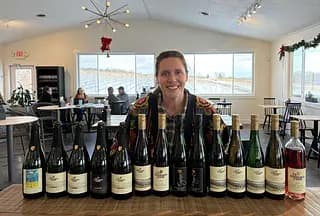
The vines Frank planted in 1958 are still producing today. They are among the oldest vinifera vines in the United States. The winery is now four generations strong; Meaghan Frank is the great-granddaughter of Konstantin and now the lead winemaker. The "Vinifera Revolution" Frank started elevated the entire New York wine industry.
Planning Your Trip
Keuka Lake requires a car. Public transit does not serve the wine trail or any shore road. The lake's Y-shape adds mileage to the circuit: running both arms from Hammondsport and returning is approximately 70 miles before accounting for stops, and a complete circuit without lodging adjustment requires planning from the start.
Nearest Airports
Elmira/Corning Regional Airport (ELM) is the closest major airport, 25 to 30 miles from Hammondsport. Greater Rochester International Airport (ROC) is approximately 55 miles from Hammondsport and 50 miles from Penn Yan. Ithaca Tompkins Regional Airport (ITH) is approximately 45 miles from Penn Yan. Most visitors driving from the New York metropolitan area or New England will find it more practical to drive the full distance than to fly into any of these three airports and rent a car on the other end.
The Shore Roads
Three roads carry the wine trail circuit. Route 54 runs north from Hammondsport along the east shore of the east arm to Penn Yan, passing Domaine LeSeurre, Ravines/Agricolae, and Keuka Spring; it is the faster and more direct of the two east arm routes. Route 54A runs the west shore of the east arm from Hammondsport through Keuka Park and Bluff Point to Penn Yan, passing Vineyard View and Yates Cellars; it is slower, more scenic, with steeper hillsides and more limited passing. County Route 76 runs the west shore of the northwest arm from Hammondsport north to Branchport, passing Keuka Lake Vineyards, Point of the Bluff, Heron Hill, and Weis. Italy Hill Road off the Branchport area climbs to Hunt Country.
One full day covers the complete wine trail circuit with time at each producer. Two days is better: one arm per day, with the heritage sites, the Outlet Trail, and time in Penn Yan built in.
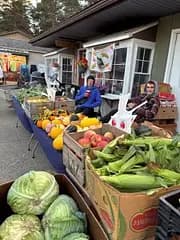
Most Keuka wineries are open year-round with reduced winter hours. The Keuka Lake Wine Trail's seven official members maintain consistent hours; independent producers vary more and are worth calling ahead in January and February. The Windmill Farm and Craft Market operates Saturdays only, late April through late November. Keuka Lake State Park's campground typically opens in mid-May and closes in October. The Keuka Outlet Trail is accessible year-round; the unpaved sections east of the waterfalls can be muddy in early spring.